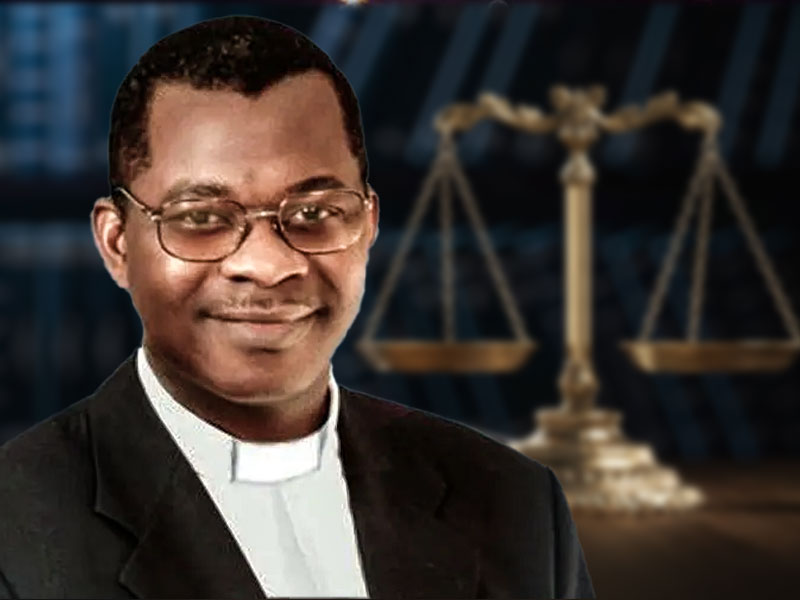
Rev. Fr. George Ehusani
The Jewish tradition taught that God forgives three times, and punishes on the fourth occasion. It was not believed that injured human beings could be more generous and gracious than God, so forgiveness was limited to three times. According to that tradition, Peter's measure (as much as seven times), is rather generous. But according to Jesus it is radically insufficient.
We reflect today on the necessity of forgiveness as a basis of relationships within the human society and the Christian community. The imperative of forgiveness towards others is grounded upon the fact that we are all sinners who live under the gracious and constant forgiveness of God. As the Psalmist says: "If you Oh Lord should mark our guilt, Lord who would survive? But with you is found forgiveness, for this we revere you" (Ps 130:3-4). The parable of the compassionate king and the cruel servant does not just inculcate the lesson of repeated forgiveness. It rebukes refusal to show mercy on the part of those who have received mercy from God. The parable rebukes the forgetfulness of our own sins which often leads to our lack of mercy and compassion towards others. Remembering how sinful we are and how our sins have gone unpunished by God should lead us to forgive others. By forgetting God's mercy and compassion we end up becoming cruel to each other.
All Christians live upon the fact that Christ suffered, died and rose from the dead in order to achieve the forgiveness of our sins and to be lord of all the living and the dead. Jesus teaches that there must be a parallel between the abundance and unfailing forgiveness of God and the unfailing forgiveness of the members of God's household. It is necessary to remember our sins always so that we may remember to forgive others. The father abundantly forgives each member of his family, but this forgiveness remains conditional: "Do unto others as I have done to you." As he puts forward clearly in the Lord's Prayer: "Forgive us our trespasses as we forgive those who trespass against us" (Mt.6:12). He adds at the end of the prayer: "Yes, if you forgive others their failings, your heavenly Father will forgive you yours; but if you do not forgive others, your Father will not forgive your failings either" (Mt.6:14-15). In Mt.7:2 he says, "the measure you give will be the measure you get."
The author of Ecclesisticus puts it powerfully thus: Resentment and anger, these are foul things too, and a sinner is a master at them both. Whoever exacts vengeance will experience the vengeance of the Lord, who keeps strict account of sin. Pardon your neighbour any wrongs done to you, and when you pray, your sins will be forgiven. If anyone nurses anger against another, can such a person then demand compassion from the Lord? Mere creature of flesh, yet cherishing resentment - who will forgive one for sinning? (Ecclesiasticus 27:30-28:5). Thus, nursing anger or cherishing resentment is dangerous for our health and salvation. It disables us and renders us defenceless when we seek the forgiveness of our own sins.
We cannot earn God's forgiveness. It is a gratuitous gift. It flows from God's mercy and compassion. But we can lose it when we jealously hoard the blessings that God gives to us. We can lose God's forgiveness when we refuse to share with others the quality of mercy, compassion and forgiveness we ourselves have received. Indeed the person who does not forgive is one who has never really experienced God's forgiveness. Those who truly belong to the household of God both experience and dispense the love of God through compassion and forgiveness on daily basis. We owe a debt to God that is infinitely much more than the debt our neighbour (or even our enemy) could ever owe us. This is why in the story we find such a big difference between the ten thousand talents owed the king by his servant and the one hundred denarii owed by the servant by a fellow servant. With sovereign majesty Jesus shatters all human calculations about the number of times an offence is committed, etc, and urges us to put no limitation at all to our forgiveness.
Jesus' reply to Peter reverses the old law of vengeance... Just as in the old days there was no limit to hatred and vengeance, so in the new dispensation, among Christians there is to be no limit to mercy and forgiveness. By narrating how the king cancelled the enormous debt of the servant, Jesus wants to teach us that God is infinite in His mercy. The imperative to forgive always is not motivated with arguments from sociology or from any legal or ethical code of conduct. Mutual forgiveness is founded on the fact that we are ourselves beneficiaries of God's generous forgiveness. God is capable of forgiving absolutely everything. The sum of evil accumulated in the world is beyond reckoning. But God, moved with compassion, forgives the entire debt, and he challenges beneficiaries of this forgiveness to go and do the same.
Many Christians often think that the greatest miracles are those concerning the multiplication of loaves and the feeding of five thousand people, the healing of the blind, the lame and the lepers, the casting out of evil spirits, etc. Christians often think that the greatest gifts of God are those related to the wonders of Pentecost - the fire of the Spirit, the gift of tongues, etc. We often forget that the greatest demonstration of God's power and presence often come in calm and quiet. The greatest wonder of God, that is, the greatest miracle for us Christians is the miracle of God's love in Christ, Christ who died for us while we were yet sinners (Rom.5:8). The most graphic demonstration of this wonder of God's love, mercy and compassion, is shown on the cross of Calvary when Jesus Christ looked and his executioners and prayed: "Father forgive them for they don not know what they do." And the greatest gift which Jesus has poured forth upon the Church is the one related to the forgiveness of sins. He says in Jn.20:22-23 "Receive the Holy Spirit, for those whose sins you forgive, they are forgiven. For those whose sins you retain, they are retained."
If there is one gift of God the world so dearly need in our day, plagued as it is by civil wars, ethnic violence, social strife and long-standing resentment, it is the gift of mercy, compassion and forgiveness. As Pope John Paul says, a world of revenge where each offender is punished according to his or her offence, will be a cold world of constant strife. Instead what we need is forgiveness. For it is only over the bridges of forgetful forgiveness that humankind will be brought together under the reign of the one merciful God. It is only through forgiveness that the perennial tension and sporadic violence between the Yoruba and the Hausa, the Igbo and the Yoruba, the Hausa and the Igbo, the Aguleri and the Umuleri, the Ijaw and the Ishekiri, the Modakeke and the Ife, the Tiv and the Jukun, etc, can be permanently overcome.
It is only through forgiveness that exploiters and the exploited, that plunderers and the plundered, and that oppressors and the oppressed in the world and in our land can be fully reconciled. It is only through forgiveness that warring brothers of Anambra and Taraba states, and the fighting sisters of Oyo and Osun states can be brought together as children of one household of God. It is only through forgiveness that warring husbands and wives and the fighting mothers-in-law and daughters-in-law can once again know peace. It is only through the generous exercise of mercy, compassion and forgiveness that our fragmented national polity will be finally reconciled, and lasting peace, unity, security and prosperity restored.
If we continue with the jungle law of responding to evil with evil, when will the circle of violence in which we are now held hostage ever end? If we respond to evil with evil, where will evil ever stop? No doubt mercy and forgiveness are among the most fundamental values of the civilisation of love launched by Jesus Christ. Those who wish to be identified as Christians must take time out to think about this and begin to practice forgiveness, otherwise, on the last day they may be told: "I do not know you, go away from me you wicked men."


The theme of conversion is a thread that runs all through Lent,…
What are the origins of Lent? Did the Church always have this time before Easter?
Lent is a…


Personal reflection can lead to prayer
Quiet, reflective time is an endangered species in…
I have been thinking a great deal about my experience at Reconciliation this past Saturday. I felt…
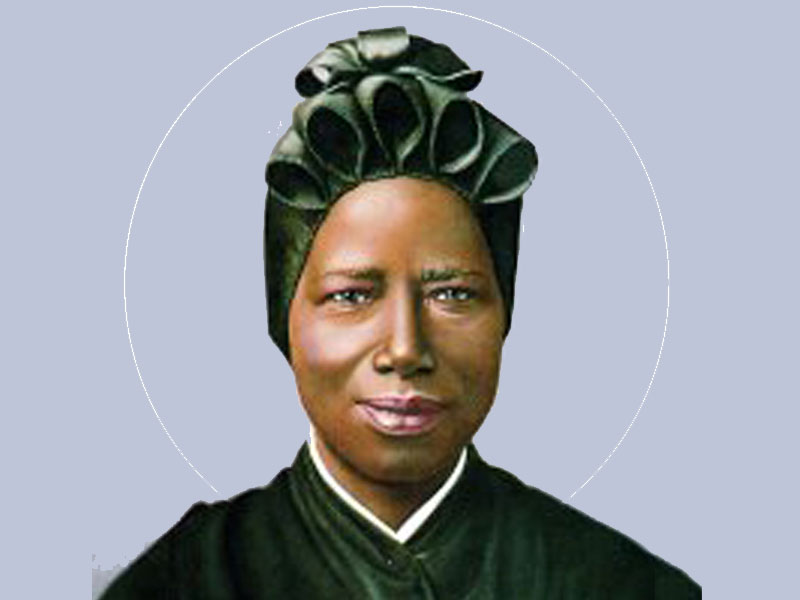
Saint Josephine Margaret Bakhita was born around 1869 in the village of Olgossa in the Darfur region…




© 2002- The Beacon International Catholic Magazine. All Rights Reserved
Another Mc.Rufus Interactive / CouchCMS Design











.jpg)