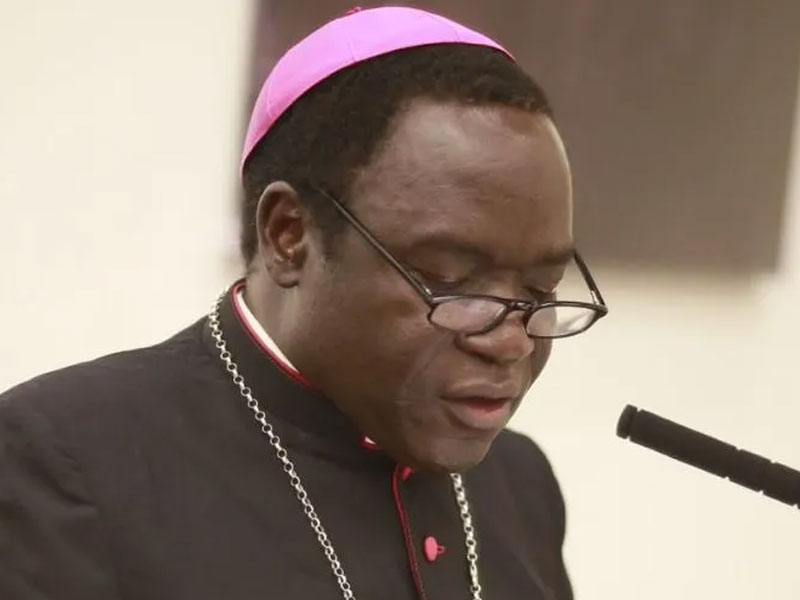
December 10, 2025 | Agnes Aineah, aciafrica.org
Bishop Anagbe has spoken extensively on persecution of Christians in Nigeria amid closure of Catholic Parishes across his Episcopal See and multiple displacements owing to heightened activities of Islamist Fulani herdsmen.
In a subsequent address to the 46th Supreme Convention of the Knights of St. Mulumba (KSM) in Kaduna on November 28, Bishop Kukah reportedly reaffirmed his stance that current claims of a genocide or systematic persecution of Christians in Nigeria are not supported by credible data.
Bishop Kukah argued that the claim “1,200 churches are burned every year in Nigeria”, lacks verification.
He asked, “In which Nigeria?”, pointing out that no one had checked with the Catholic Church to confirm such numbers.
The Bishop emphasized that “genocide” is defined not by the number of deaths or attacks alone, but by intent, whether there is a deliberate plan to eliminate a group. He said, “You can kill 10 million people, and it still won’t amount to genocide. What matters is intent.”
He also challenged the use of terms such as “martyrdom”, pointing out that some violence might be criminal or opportunistic rather than motivated by religious hatred.
In his statement published on December 9, the Bishop of Sokoto gave his position on the situation of Christianity in Nigeria, saying, “For the records, I did not say that Christians are not persecuted in Nigeria!”
He said that in his November 28 address, he spoke about the challenges of “bearing witness to Christ in a time of persecution.”
“I drew lessons from history and the stories of brave men and women in Nigeria and Africa as models of witnessing in times such as these. I concluded that the greatest challenge for Christians was unity and solidarity,” Bishop Kukah said.
He added, “Given the huge human and material resources that we have as Christians in Nigeria, if only we stood together, I argued, we would have no reason to be victims of persecution. Nothing here implied a denial of the fate of Christians.”
The Bishop maintained that over the years, he had spoken extensively on the theme of persecution of Christians, and had argued “then as now” that “by whatever name we choose to call or describe our predicament, the bloodshed needs to end as soon as yesterday because our common humanity is at stake.”
Calling for urgent action to stop security in Nigeria, he said, “The government and its security agencies have an urgent responsibility to bring the perpetrators to account. It is their neglect of this duty or their failure to accomplish it that detains us all in an appearance of disagreement without difference.”
Back To News List

The best definition for love according to St. John is that God is love.If so, as people created in the likeness of God, we are also people of love. We are created to love and receive love also. Perfect love…
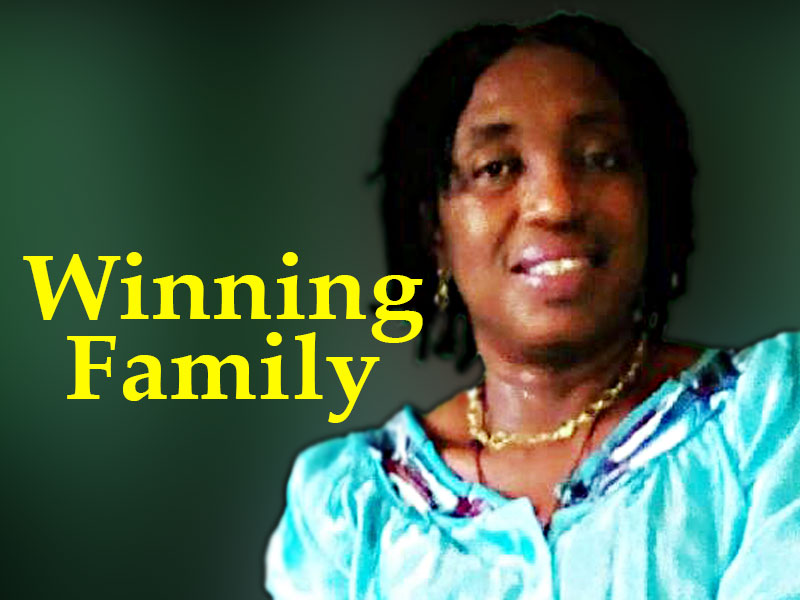
Marriage relationship is based on love. Love in itself is compassionate and expressive, showing care and understanding of the person we love. Bearing this in mind, one wonders what happens when love in marriage relationships become sour.
With experience,…
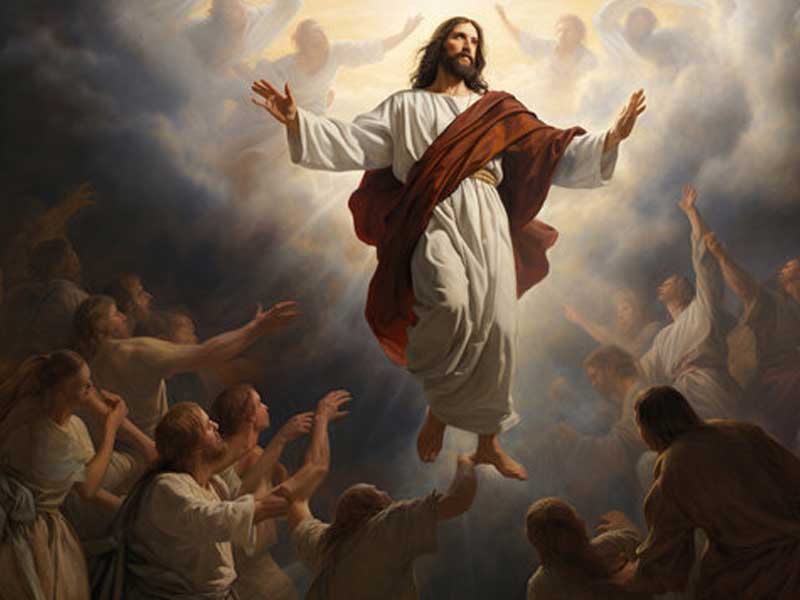
Forty days after his Resurrection, Jesus ascended into heaven. During this period between his Resurrection and Ascension, He actually gave the primacy He had promised to Peter, as we read in John 21. The many events between His resurrection and…

Protestant attacks on the Catholic Church often focus on the Eucharist. This demonstrates that opponents of the Church-mainly Evangelicals and Fundamentalists-recognize one of Catholicism’s core doctrines. What’s more, the attacks show that Fundamentalists are not always literalists. This is seen…

In many news stories these days, reporters use the words “executive compensation,” “deregulation,” and “profits” in pejorative, unflattering terms. In this epic battle, we all know the villains – those diabolical profit-seekers and their ilk. They are, according to this…

“Unless the Lord build the house, they labor in vain who build…” (Psalm 127:1).
“Children’s children are the crown of the elderly, and the glory of children is their parentage” (Proverbs 17:6).
Grandchildren are one of the great blessings we can look…

“Once an alcoholic, always an alcoholic.”
Right?
“Once a liar, always a liar.”
Right?
Well, according to the wisdom of this world, that’s right. Perhaps you heard this counsel from your parents or grandparents, or from a judge, or from a…





© 2002- The Beacon International Catholic Magazine. All Rights Reserved
Another Mc.Rufus Interactive / CouchCMS Design











.jpg)