December 10, 2025 | Victoria Cardiel/ACI Prensa/CAN
The Holy Father asserted that only the resurrection of Christ ‘is capable of illuminating the mystery of death to its full extent.’
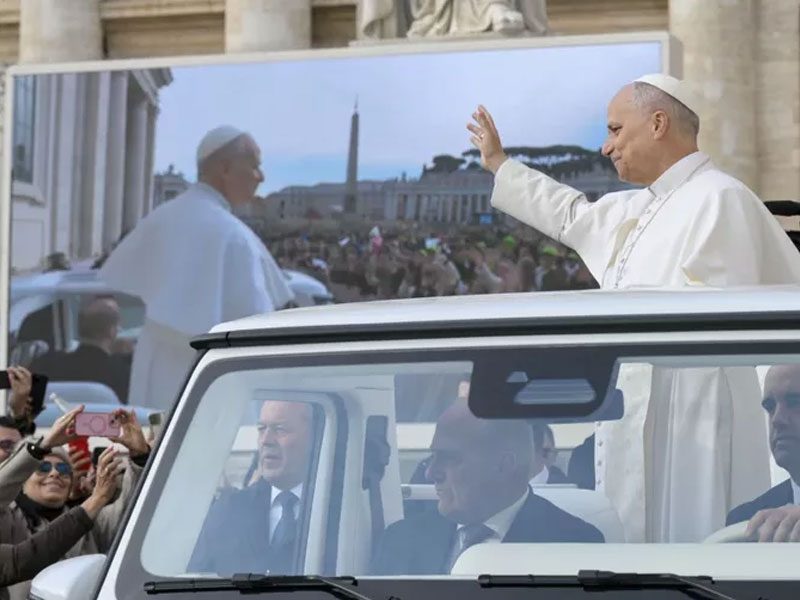
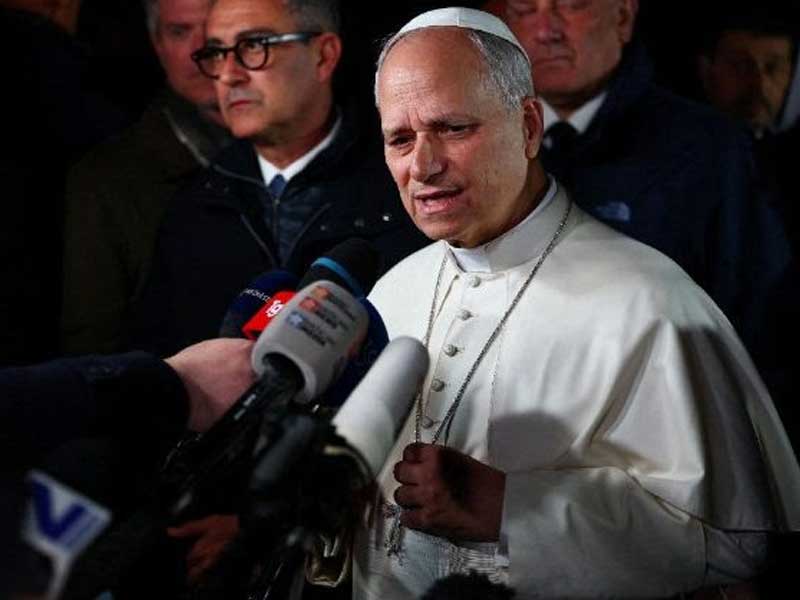
Pope Leo XIV on Wednesday rejected technological promises to indefinitely prolong human existence — such as those proposed by “transhumanism” — and said the resurrection of Christ “reveals to us that death is not opposed to life.”
Speaking on a cold morning in St. Peter’s Square on Dec. 10, the Pontiff warned that numerous current anthropological visions “promise immanent immortality [and] theorize the prolongation of earthly life through technology.”
That outlook, he said, is characteristic of “the transhumance scenario,” a phenomenon that “is making its way into the horizon of the challenges of our time.”
In response, Leo urged people to consider two central questions: “Could death really be defeated by science? But then, could science itself guarantee us that a life without death is also a happy life?”
The Holy Father explained that death and life are not opposed, and that in the Christian meaning, death is “a constitutive part of [life], as the passage to eternal life.”
“The Pasch of Jesus gives us a foretaste, in this time still full of suffering and trials, of the fullness of what will happen after death,” he added.
At the end of his audience, Pope Leo spoke out against violent clashes at the border of Thailand and Cambodia, saying he was “deeply saddened by the news of the escalation of the conflict.”
The hostilities have injured more than 100 people and displaced thousands of people in both countries. An estimated 13 people, including civilians, have been killed as the fighting entered the third day on Wednesday.
“I express my closeness in prayer to these beloved populations and I ask the parties to immediately cease fire and resume dialogue,” the Pope said.
In his catechesis for the general audience, Leo XIV noted that, throughout history, “many ancient peoples developed rites and customs linked to the cult of the dead, to accompany and to recall those who journeyed towards the supreme mystery.” But today, death “seems to be a sort of taboo” and “something to be spoken of in hushed tones, to avoid disturbing our sensibilities and our tranquility.”
The Pope lamented that this attitude often leads people to avoid visiting cemeteries.
He also evoked the teachings of St. Alphonsus Liguori, recalling the enduring relevance of the saint’s work Preparation for Death. The Pontiff emphasized that, for the saint, death is “a great teacher of life,” capable of guiding the believer toward what is essential.
As the Pope explained, St. Alphonsus invited people to “to know that [death] exists, and above all to reflect on it,” as a way to discern what is truly important in life.
Leo also recalled that, in Alphonsian spirituality, prayer holds a central place “to understand what is beneficial in view of the kingdom of heaven and letting go of the superfluous that instead binds us to ephemeral things.”
From this perspective, he asserted that only the resurrection of Christ “is capable of illuminating the mystery of death to its full extent.”
“In this light, and only in this, what our heart desires and hopes becomes true: that death is not the end, but the passage towards full light, towards a happy eternity,” he said.
The Pope explained that the Risen Christ “has gone before us in the great trial of death, emerging victorious thanks to the power of divine Love.”
Leo said: “He has prepared for us the place of eternal rest, the home where we are awaited; he has given us the fullness of life in which there are no longer any shadows and contradictions.”
Back To News List
The best definition for love according to St. John is that God is love.If so, as people created in the likeness of God, we are also people of love. We are created to love and receive love also. Perfect love…
Marriage relationship is based on love. Love in itself is compassionate and expressive, showing care and understanding of the person we love. Bearing this in mind, one wonders what happens when love in marriage relationships become sour.
With experience,…
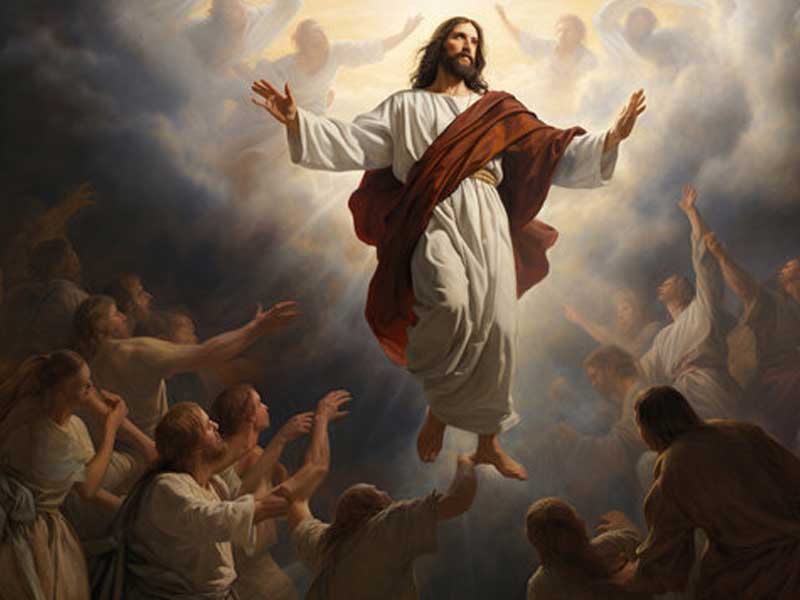
Forty days after his Resurrection, Jesus ascended into heaven. During this period between his Resurrection and Ascension, He actually gave the primacy He had promised to Peter, as we read in John 21. The many events between His resurrection and…
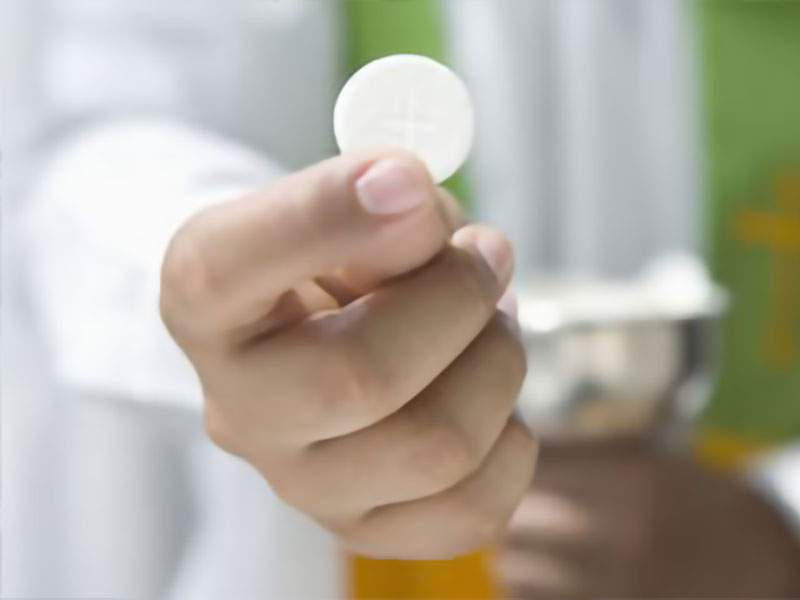
Protestant attacks on the Catholic Church often focus on the Eucharist. This demonstrates that opponents of the Church-mainly Evangelicals and Fundamentalists-recognize one of Catholicism’s core doctrines. What’s more, the attacks show that Fundamentalists are not always literalists. This is seen…

In many news stories these days, reporters use the words “executive compensation,” “deregulation,” and “profits” in pejorative, unflattering terms. In this epic battle, we all know the villains – those diabolical profit-seekers and their ilk. They are, according to this…
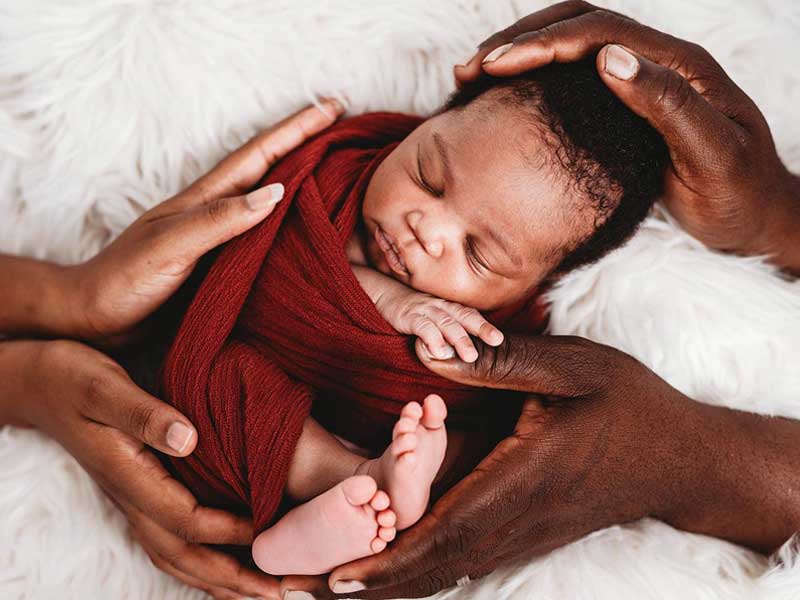
“Unless the Lord build the house, they labor in vain who build…” (Psalm 127:1).
“Children’s children are the crown of the elderly, and the glory of children is their parentage” (Proverbs 17:6).
Grandchildren are one of the great blessings we can look…

“Once an alcoholic, always an alcoholic.”
Right?
“Once a liar, always a liar.”
Right?
Well, according to the wisdom of this world, that’s right. Perhaps you heard this counsel from your parents or grandparents, or from a judge, or from a…



© 2002- The Beacon International Catholic Magazine. All Rights Reserved
Another Mc.Rufus Interactive / CouchCMS Design









.jpg)